The Strokes
There are four distinct strokes in competitive swimming. They are freestyle, backstroke, breaststroke and butterfly. The individual medley (IM) is an event in which the athlete swims equal distances of each stroke in this order: butterfly, backstroke, breaststroke, and freestyle. Each swimming stroke has specific rules which distinguish the strokes from one another and ensure that no swimmer gains an unfair competitive advantage.
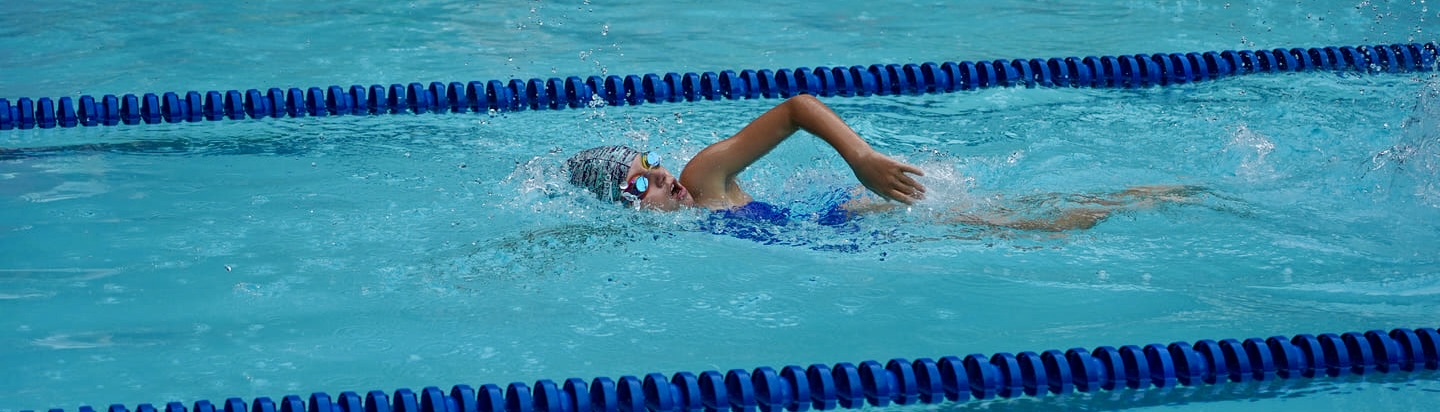
Freestyle
The swimmer may choose any stroke to complete the required distance for the event. The swimmer may hang on the ropes or stand on the bottom, if the swimmer must rest. However, any forward motion attributed to pushing off the bottom or lane ropes will be grounds for a disqualification.
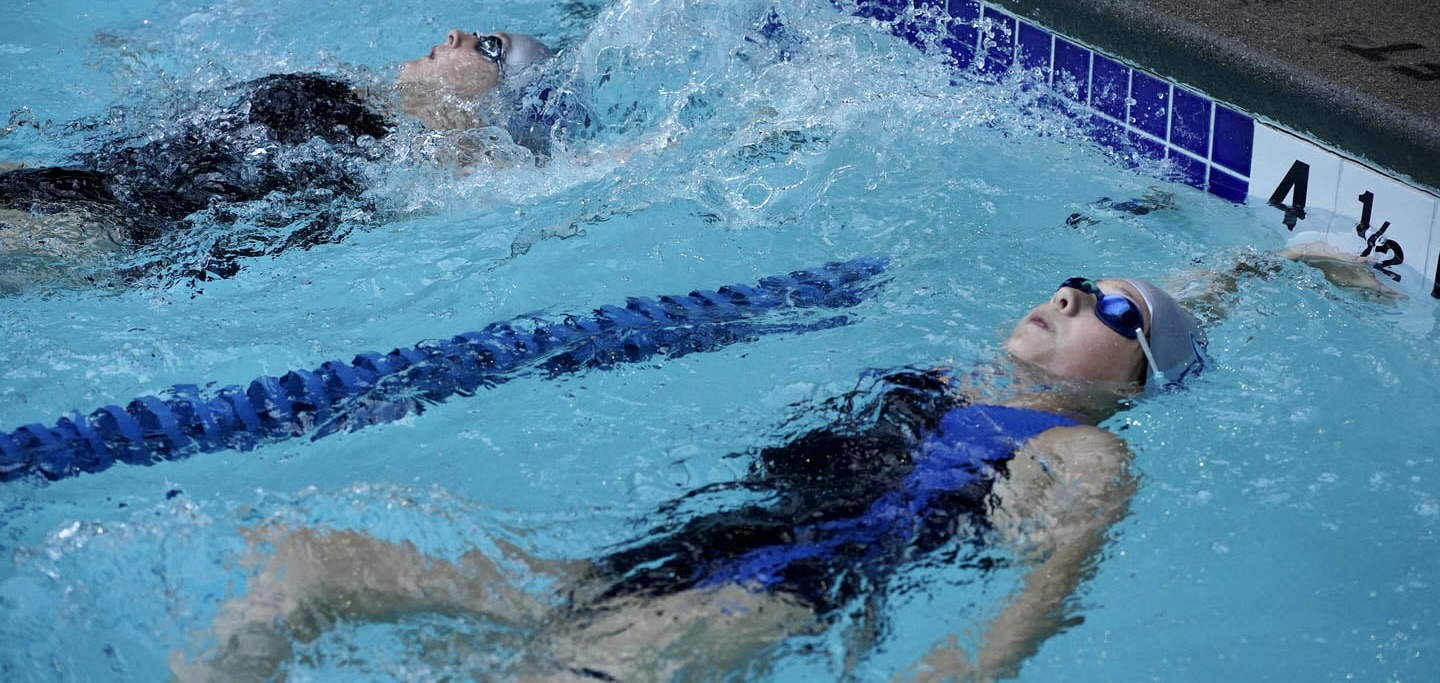
Backstroke
The start of the backstroke is in the water with your legs and stomach towards the start side of the pool. The feet may be placed on the wall to push off the wall at the start. However, the toes may not be above the surface of the water.
The swimmer must swim the distance of the pool on his/her back and remain on the back throughout the race. The race is completed when any part of the body touches the wall.
The wall may be touched with one hand to complete the race. If the distance of the race is greater than 25 yards, the swimmer may turn on his/her stomach to complete the turn. The swimmer may not take more than one arm pull once he/she has turned on the stomach to turn. Once the single arm turn is complete, the swimmer must start the forward rotation to complete the turn. If executing the turn on the stomach, the swimmer must make sure that some part of the body touches the wall (assume the feet will touch). Upon leaving the wall, the swimmer must be on their back. Swimmer must finish the race on their back.
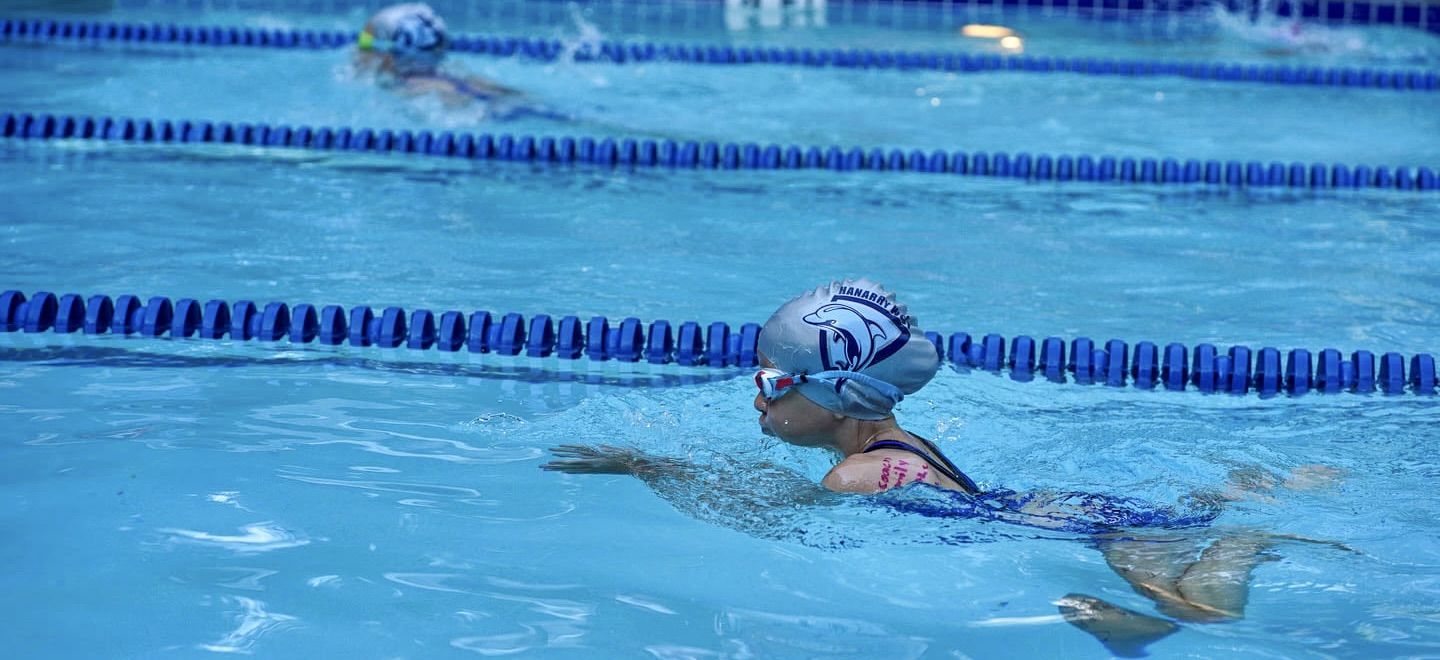
Breaststroke
To start the event the swimmer may dive off the blocks, the side of the pool, or start in the water and push off from the side. In all instances, the swimmer must leave the wall with the stomach towards the bottom of the pool.
The actual stroke consists of an arm pull from above (in front of the head), down to the chest, and then hands returned to the position above the head. The hand pull must be followed by a leg kick similar to a frog kick. The feet need to be turned outwards. At some point between the arm pull and the leg kick, the head must break the surface of the water. The stroke is then repeated in the same sequence.
Touching the wall must be done with both hands simultaneously. If the event is longer than 25 yards, once you have touched the wall with both hands, you may turn in any fashion, as long as you leave the wall with the stomach towards the bottom of the pool
As an important note, this is the only stroke that must follow a sequence of arm pulls and leg kicks and can’t be alternated. If you stop midway in the stroke and then begin again, this is subject to a disqualification.
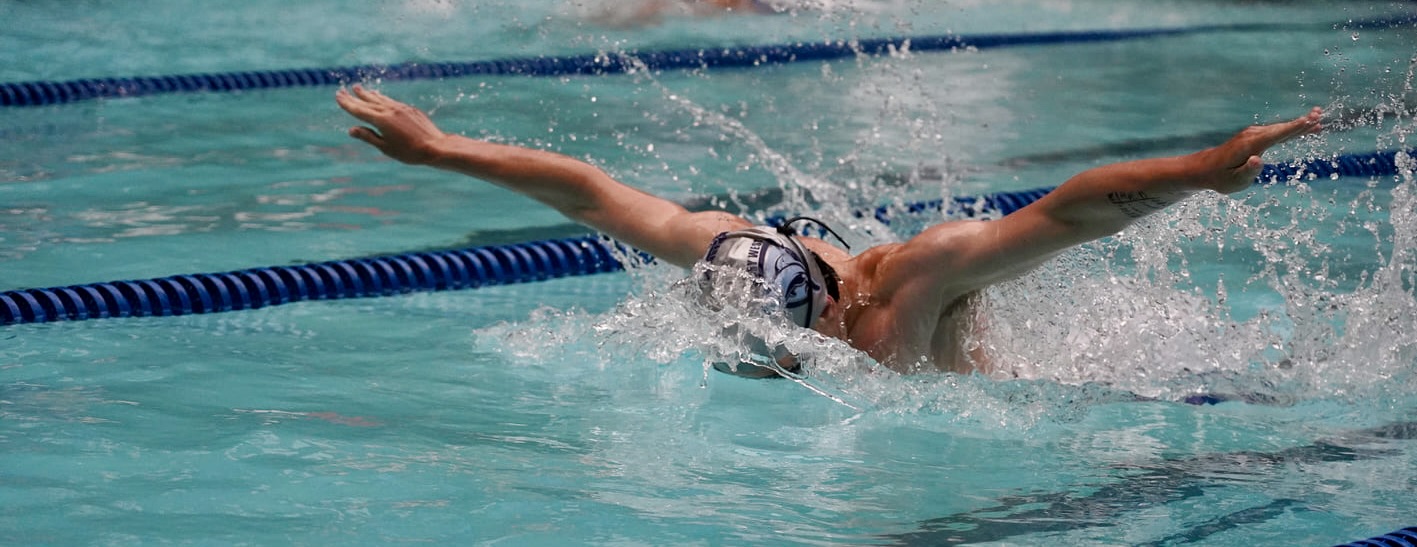
Butterfly
The start of the butterfly is the same as for the breaststroke. You may start from the blocks, the side of the pool, or a forward start in the water. When leaving the wall, the stomach must be towards the bottom of the pool.
The arm pull begins over the head and the hands are brought down to the waist in front of the swimmer. The hands are then returned to the start position, with the hands coming over the shoulders. The arm pull must be performed with both arms moving simultaneously and may not alternate.
The legs must kick in a dolphin fashion and must be done in a simultaneous motion. The leg/foot positions may not alternate, but must remain in the same relative position to the other leg/foot.
Touching the wall must be done with both hands simultaneously. If the distance to swim is longer than 25 yards, once you have touched the wall with both hands, you may turn in any fashion as long as you leave the wall with the stomach towards the bottom of the pool.